
ITC, State Bank of India, HCL Technologies and IndusInd Bank were the other big laggards. NTPC, UltraTech Cement, HDFC Bank and Mahindra & Mahindra were among the gainers.
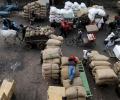
Moody's Ratings on Wednesday said India's economic growth will exceed 6.5 per cent in the next fiscal, up from 6.3 per cent this year, on higher government capex and consumption boost from tax cuts and interest rate reduction. Projecting a stable outlook for the banking sector, Moody's said although the operating environment of Indian banks will remain favourable in the next fiscal, their asset quality will deteriorate moderately after substantial improvements in recent years, with some stress in unsecured retail loans, microfinance loans and small business loans.

India must improve business climate.

The average Indian worker must labour for an extraordinary 160 full working days to afford Apple's latest iPhone 17 Pro.

An increase in government spending on the healthcare sector - from the current 1 per cent to 2.5-3 per cent of GDP - as envisaged in the National Health Policy 2017 could reduce out-of-pocket expenditures, as per the Economic Survey 2020-21. The rise in public spending can lead to a reduction in expenditures from 65 per cent to 30 per cent of overall healthcare spend, it noted. The Economic Survey said that for the country to effectively respond to future pandemics, the country's health infrastructure needs to be agile. Given its potential to provide healthcare access in remote areas, telemedicine needs to be harnessed to the fullest by especially investing in internet connectivity and health infrastructure, it added.

Eight of the top 10 employers showed a double-digit growth in fixed capital. Only one out of 10 showed a double-digit addition in employment.
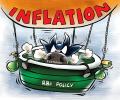
Amid a debate on the basis of a monetary policy stance, one may be curious enough to know how non-food retail inflation has behaved over the years in India. Let the eager souls catch a glimpse of facts. In the past 10 years, non-food inflation came down below 4 per cent on two occasions - pre-Covid period of 2019-20 and now in the first four months of the current financial year (FY25).

Citing a research paper by A Banerjee, S Cole and E Duflo on the Indian banking sector, it noted that the fear of prosecution for corruption resulted in reduced lending in an affected branch of a PSU bank as well as in neighbouring branches for around two years.

The government should cut customs duties and streamline export promotion schemes and pay special attention to infrastructure to overcome the contracting exports on account of recession in India's major trading partners, the Economic Survey said.

India's primary deficit (Centre and states) for FY21 is assumed to be 6.8 per cent of GDP, according to the Economic Survey tabled in Parliament on Friday. It said the Covid-19 pandemic has created a significant negative shock to demand. Active fiscal policy -- one that recognises that fiscal multipliers are disproportionately higher during economic crises than during economic booms -- can ensure that the full benefit of seminal economic reforms is reaped by limiting potential damage to productive capacity.
With regard to foreign institutional investors, the survey said that there are signs that FIIs who had recorded net outflows in 2008-09 may have returned to the Indian market in the last two months.

Ahead of the assembly polls in Rajasthan, the Congress government on Saturday night issued an order for the conduct of a caste survey in the state.
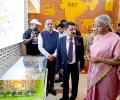
Nearly 96 per cent of new applicants will benefit from this simplified approval route.

Gen Z, driven by AI anxiety and economic pragmatism, have concerns about pursuing passions as careers as they fear it may not make them enough sufficient income.

The Survey says that present skilled workforce in India is only 2%.

'Women weavers are hardworking, open to learning, resilient.' 'They finish their cooking, housework, puja, then they come to weave.' 'They care about design. They care about beauty.'

Iconic dialogues from Bollywood movies like Sunny Deol's Damini, have found its place in the Economic Survey 2018.

The book was thinner by 60 pages compared to last year.

A string of welfare schemes and promises tests the state's budget, which is already heavily dependent on central support and spends little as capital outlay.

Bihar's upcoming elections are marked by the significant presence of candidates from political families, raising questions about ideological commitments and democratic principles.

Indian manufacturing sector witnessed the fastest improvement in operating conditions in over 17 years in August, driven by an increased production efficiency and healthy demand conditions, a monthly report said on Monday. The seasonally adjusted HSBC India Manufacturing Purchasing Managers' Index (PMI) rose from 59.1 in July to 59.3 in August, indicating the fastest improvement in operating conditions for 17-and-a-half years.

'...the electoral playing field is tilted significantly in its favour.'
High domestic food prices are still a cause for concern despite India hugely benefiting from a slump in global oil and commodity prices that pushed inflation into negative zone, the Economic Survey said.

Even by conservative assumptions that 5 to 10 per cent of infected individuals develop long Covid, India today may be home to 50 to 100 million infected individuals -- many silently coping with breathlessness, fatigue, palpitations, brain fog, or unexplained clotting tendencies.

By any economic theory or doctrine, this is no Budget that supports economic recovery, whether through supporting aggregate demand, or through expansionary stimulus, declares Rathin Roy.
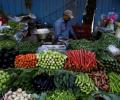
Retail inflation during the first month of the current fiscal stood at 2.9 per cent, down from 4.6 per cent a year ago. Food inflation based on Consumer Food Price Index declined to a low of 0.1 per cent during the financial year 2018-19, the survey said.

Whether it was in the company of superstars Rajinikanth and Kamal Haasan -- or, on rare occasions with both together, among others -- Saravanan's demeanour would stand out, observes N Sathiya Moorthy.
A day before the announcement of the Union Budget for 2004-05, the Economic Survey called for "overhauling" the tax exemption regime saying low Tax:GDP ratio was a prime concern and it was coming in the way of improving government finances.
Three years after the government brought in a SEZ law promising greater economic activity on the back of tax sops, the Economic Survey on Thursday expressed concern over 'proliferation' of Special Economic Zones seeking a check on them.

The National Annual Report & Index on Women's Safety (NARI) 2025 reveals the safest and least safe cities for women in India, highlighting factors influencing safety perceptions and experiences.
It noted that the economy underwent a transition -- possibly, structural and permanent -- from high to low inflation in the last three years.

'Poverty eradication is a continuous process. There is no full stop to it.'
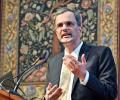
There is a "misperception" among the administration around deregulation, wherein digitisation is confused with deregulation, Chief Economic Advisor V Anantha Nageswaran said on Tuesday. Speaking at an event organised by alternative investment industry's lobby grouping IVCA in Mumbai, Nageswaran stressed that what is essential is to do away with needless regulations, whether they are to be complied with online or offline.
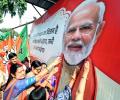
The National Democratic Alliance was set to sweep the Bihar assembly polls, surging ahead in over 200 of 243 seats on Friday with the Bharatiya Janata Party emerging as single largest party with about 90 per cent strike rate, reaffirming the popularity and campaign clout of Prime Minister Narendra Modi, who was the face of the ruling alliance through the poll battle in the highly sensitive political state.

Outlook for external sector is the most favourable.

From the 30-share blue-chip pack, ITC Hotels, IndusInd Bank, Mahindra & Mahindra, Sun Pharma, UltraTech Cement and NTPC were among the biggest gainers. Titan, Kotak Mahindra Bank, Nestle, Asian Paints, HCL Tech and ICICI Bank were among the laggards.

Nearly one in five older Indians are affected by diabetes with many remaining unaware that they have the disease.

Terming investment in infrastructure "quintessential" to boost growth, the Economic Survey on Friday said post unlocking of the economy, infra sectors are poised for growth and construction of roads is expected to return to the high pace attained before COVID-19. The infrastructure sector will be the key to overall economic growth and macroeconomic stability, the Survey said emphasising that the year after the crisis (2021-22) will require sustained and calibrated measures to facilitate the process of economic recovery and enable the economy to get back on its long-term growth trajectory. "Basic infrastructure facilities in the country provide the foundation of growth. In the absence of adequate infrastructure, the economy operates at a suboptimal level and remains distant from its potential and frontier growth trajectory.
Last year, the Survey suggested a long list of reforms, but most of these found no place in the Budget.
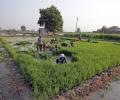
'They are totally disconnected with farm activities which their families have been involved in for years.'
